
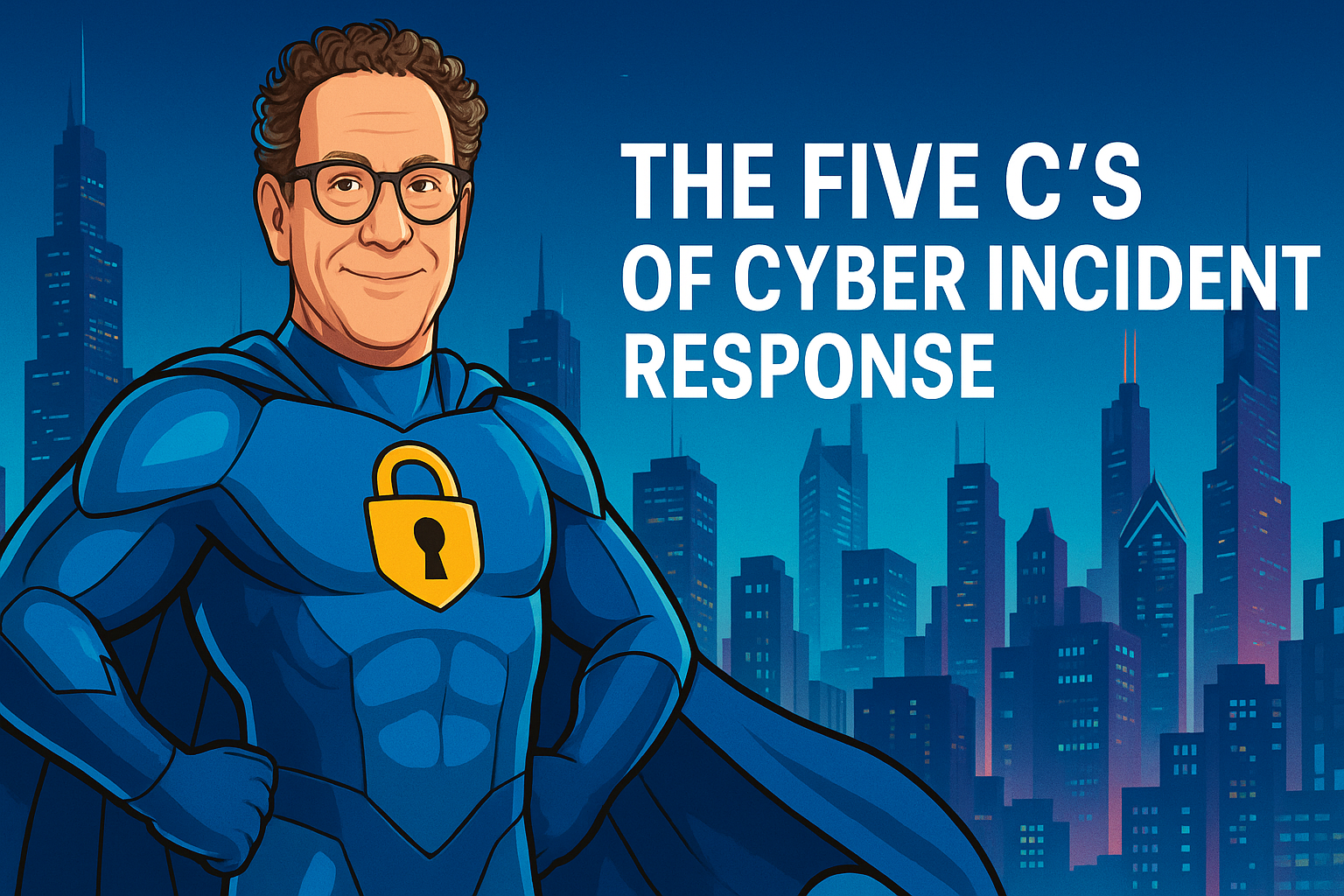
Plan Now or Pay Later. The Five C’s of Cyber Incident Response
I can’t count how many times I’ve been called in after a cyber incident occurs and heard the same thing:
“Our systems are military-grade.”
“I was told this could never happen to us.”
“We didn’t think we’d be a target.”
Every time I hear those words, I know I’m about to help a company fight for its reputation, its customers and sometimes its very survival. And while I’m glad to assist, the truth is: this is work that should have started long before I ever got the call.
The time to build your cyber incident response plan is now, while your team has the bandwidth, the clarity and most importantly, the luxury of time to think strategically. Waiting until an attack hits means you’re working in crisis mode, without a playbook and often without alignment across leadership.
And let’s be clear, no matter how advanced your cybersecurity infrastructure may be, no one is immune. One employee. One click. One exposed credential. That’s all it takes for your systems to go dark, your data to be held hostage, and your brand to hang in the balance.
That’s why I always advise organizations to build their planning around what I call The Five C’s of Effective Cyber Communications Incident Response:
- Communications – Clear, consistent and well-prepared messaging helps preserve trust when the pressure is highest.
- Control – Planning allows your team to take control of the narrative instead of reacting to rumors, leaks or media reports.
- Clarity – A strong plan outlines roles, responsibilities and escalation protocols. No guessing when minutes matter.
- Candidness – Eventually, you’ll need to tell your stakeholders what happened. When organizations try to hide the truth, it almost always backfires.
- Continuity – Your customers and partners expect service to resume. Your planning must ensure operations get back online quickly and with confidence.
Here’s the reality
Cybercriminals are now using AI to supercharge their efforts. They move faster, target smarter and often come back for more. Double and even triple extortion attacks are becoming more common, where your data is not only encrypted and held for ransom, but also stolen, sold or weaponized for reputational damage.
In this environment, the importance of candor cannot be overstated. When you’re the victim of a cybercrime, you’re dealing with criminals, not people you can trust to keep their end of the deal. If you try to conceal the incident and it gets out, which it often does, you’ve just added a reputational crisis on top of a technical one.
So, what should you do today?
- Start building your plan
- Talk through your scenarios
- Create communications templates
- Conduct tabletop exercises
- Train your team
If you need help, ask for it. That’s not a sign of weakness, it’s a sign of resilience.
Because in a world where a single click can bring your systems down, planning ahead isn’t a luxury. It’s a necessity.
Let’s connect if you want to discuss how to develop a cyber incident response plan tailored to your organization. The best time to plan is before something happens, not after.