
Reputation Management in a High-Risk World
Why every organization needs a strategy
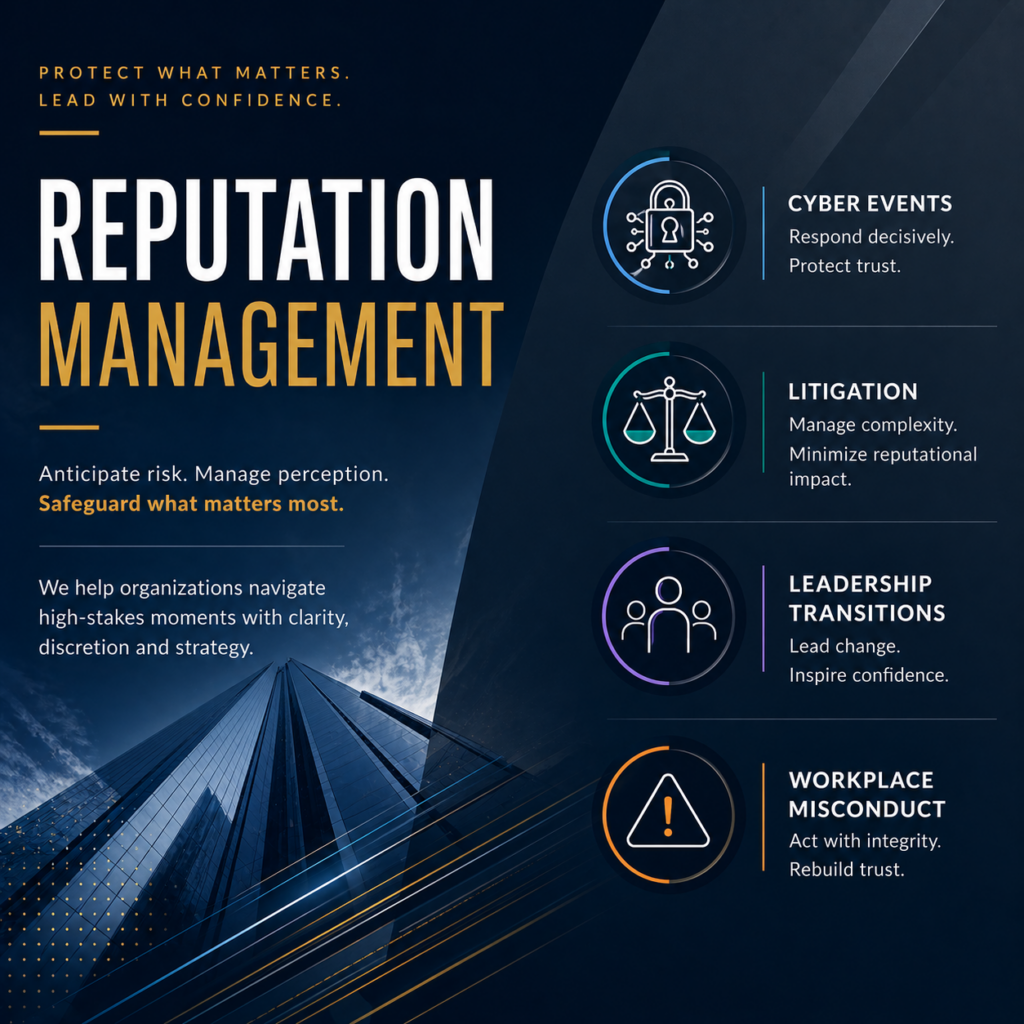
In today’s fast-moving business environment, an organization’s reputation can be one of its most valuable assets and one of its most vulnerable. A single cyber incident, executive leadership change, lawsuit, regulatory inquiry, workplace misconduct allegation, operational disruption, or negative media story can quickly shift public perception and create lasting consequences.
That is why reputation management has become an essential business priority for companies of all sizes. Organizations that proactively protect their brand, prepare for crises and communicate effectively during high-stakes moments are better positioned to maintain trust, preserve customer confidence and emerge stronger after adversity.
What Is Reputation Management
Reputation management is the strategic process of protecting, maintaining and strengthening how an organization is perceived by key stakeholders, including:
- Customers
- Employees
- Investors
- Board members
- Business partners
- Regulators
- Media
- Communities
It includes both proactive reputation management and crisis reputation management.
Proactive efforts may include:
- Executive visibility strategies
- Positive media relations
- Thought leadership campaigns
- Internal communications planning
- Brand trust initiatives
- Online reputation monitoring
- Risk assessments
- Crisis communications planning
Reactive efforts may include:
- Crisis response messaging
- Media statement development
- Stakeholder communications
- Social media response strategy
- Litigation communications
- Leadership transition messaging
- Cyber incident communications
- Employee morale and retention messaging
Why Reputation Matters More Than Ever
Today, information moves instantly. News spreads across traditional media, social media, search engines and private messaging platforms in minutes. Once a narrative takes hold, it can be difficult to reverse.
Strong reputation management helps organizations control the narrative, respond with confidence and reduce unnecessary damage.
Cyber Incidents Often Become Reputation Events
Many organizations still view cybersecurity incidents strictly as technical matters. In reality, they frequently become communications and trust issues that extend far beyond the IT department.
“Many cyber events turn quickly into reputation management events. The IT elements of an incident are often addressed faster than the resulting stakeholder concerns, media scrutiny and trust issues,” according to Dave Smolensky, Resolute Strategic Services’ Managing Partner. “Systems may be restored, but reputation recovery requires strategy, discipline and sustained attention.”
This reality is especially common in cases involving:
- Ransomware attacks
- Data breaches
- Business e-mail compromise (BEC)
- Data theft and extortion
- Vendor incidents
- Privacy concerns
- Operational disruptions caused by cyber events
Even after systems are stabilized, organizations may still need to manage employee concerns, customer questions, media inquiries, board expectations and public perception.
Common Reputation Risks Facing Organizations
Reputation threats can emerge from many directions, including:
- Cybersecurity Incidents – Data breaches, ransomware, privacy issues and operational outages.
- Litigation and Investigations – Lawsuits, regulatory reviews, whistleblower claims and public disputes.
- Leadership Transitions – Unexpected CEO resignations, executive misconduct, succession planning and board changes.
- Workplace Misconduct – Harassment claims, discrimination allegations, cultural issues or internal conflicts.
- Operational Failures – Service outages, product issues, supply chain disruptions, safety events or missed commitments.
- Negative Media Coverage – Investigative reporting, viral criticism, misinformation or activist campaigns.
What Effective Reputation Management Looks Like
Organizations that handle difficult moments well typically focus on five principles:
- Preparation Before a Crisis – Build plans, messaging frameworks, spokesperson readiness and decision-making processes in advance.
- Fast, Fact-Based Communications – Respond quickly without speculation. Accuracy matters.
- Stakeholder Prioritization – Different audiences require different messaging approaches.
- Consistency Across Channels – Employees, customers, media and leadership should hear aligned messages.
- Long-Term Recovery – Reputation repair often continues after the immediate issue is resolved.
How Companies Strengthen Reputation Resilience
Organizations facing high-stakes reputation challenges often benefit from experienced, strategic guidance during sensitive moments involving cyber incidents, litigation, leadership transitions, workplace issues, and other matters that can quickly impact trust and confidence.
Support may include:
- Crisis communications planning
- Cyber incident communications support
- Media relations strategy
- Executive communications coaching
- Stakeholder messaging development
- Leadership transition communications
- Litigation communications support
- Online reputation guidance
- Post-incident reputation recovery strategies
Keep in Mind
Reputation is earned over years and can be tested in a single day. Organizations that understand the importance and invest in reputation management before they need it are far more resilient when challenges arise.
Whether facing a cyber event, legal dispute, executive transition or an emerging controversy, the right strategy can make the difference between prolonged damage and a successful recovery.